Ambassador of Books ~ Book Club Madam ~ Blogger Gal
Showing posts with label read-a-long. Show all posts

Monday, October 31, 2011

Dueling Monsters: Dr. Moreau Recap


Thank you to everyone who participated in the Dr. Moreau portion of this year's Dueling Monsters read-a-long! I hope you enjoying getting to know Moreau - he certainly gave me the creeps ...
Be sure to check out all the reviews and see if others had the same reaction to the book that you did. And if I forgot to include your review here let me know in the comments.
  • Nick @ Lions and Men - "the novel was a fun ride through a haunted house of grotesque beasts and even more nefarious men"
  • Trisha @ eclectic/eccentric - "the main premise in this short novel is about playing god"
  • Bev @ My Reader's Block - "hands down, Wells writes a nightmare like nobody's business"
  • Erin @ Erin Reads - "Moreau [...] should appear next to this particular meaning of “monster” in the dictionary"
  • SFP @ Pages Turned - "Doctor Moreau is, in short, as psychopathic as they come"
  • Jill @ Fizzy Thoughts - "Wells managed to create a character utterly lacking in morals"
  • and mine - "The cruelty of humanity scares me more than just about anything else in this world"
One of my favorite podcasts, Guys Can Read, also read and discussed Moreau this month. You can check out their fascinating take on the book in their two part review.

Thank you to everyone who participated! I hope you had a good time with this year's monsters! Now to figure out which ones we'll pick in 2012 ...

Sunday, October 30, 2011

The Call of Cthulhu - quick thoughts


by HP Lovecraft
50 pages


In this short story, a classic of the horror genre, a young man discovers references to a creepy cult in his deceased uncle's paperwork. The cult has apparently been around since the dawn of time and it's followers are quite creepy and violent. Others who come into contact with the cult - or the god behind it, Cthulhu - often go crazy and may even commit suicide. The god hails from the distant stars and personifies creepiness and chaos.

[Cover]The book is basically a summary of the information the young man has compiled about the cult. There isn't much of a storyline here. Cthuhlu is creepy, yes, but that's about all there is to it. It is a quick, rather dry, story, and I can't say that I felt strongly about it one way or the other.

I read this for part of this year's Dueling Monsters challenge. Check out Fizzy Thoughts on 10/31 to see what others thought of this tale.

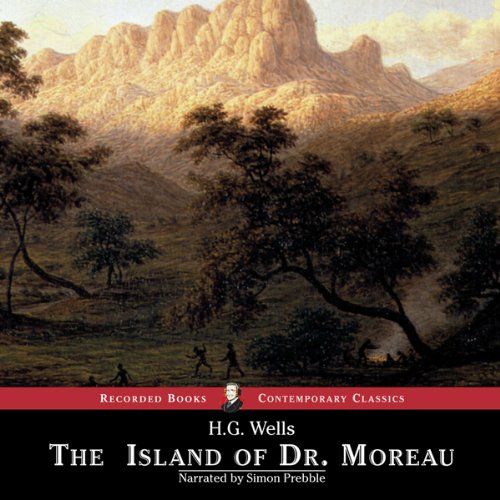
The Island of Dr. Moreau

by H.G. Wells
audiobook: 5.25 hours
narrated by Simon Prebble

About the Book

Edward Prendick is rescued from a life raft at sea by a ship ship carrying an odd cargo that includes myriad wild animals and two unusual men named Montgomery and M'ling. After a series of confrontations between the crew and the two odd men, the captain arrives at their destination, a solitary island in the middle of the sea. The captain is only too glad to rid himself of the animals and the men, and forces Edward to leave the ship at well. Once on the island Montgomery introduces him to Dr. Moreau, a scientist who uses the island as the base for his experimentation. Over time Edward learns the details of Moreau's experiments on the other inhabitants of the island and he must decide for himself whether Moreau is brilliant or insane.

Why I Read It

I chose this book as my side of this year's Dueling Monsters challenge because H.G. Wells fascinates me. I don't always love his writing but I am constantly amazed by the ideas in his stories.

My Thoughts

This is one CREEPY story. From the very first time Edward steps on board the rescue ship I had the feeling that things were Not Right even though I couldn't put my finger on what exactly was wrong. Once on the island things got even weirder for Edward, and for me as the reader. I had an idea of what Moreau was up to before I started this book but I didn't have the details right.

*** SPOILER ALERT #1 ***
I didn't realize that Moreau was experimenting on animals and turning them into people. I had thought he was grafting animals parts onto human bodies. Although both are horrible, Moreau's actual experiments were worse than what I thought ahead of time. The idea that he could CREATE humanity - and that he does so with some success - is so beyond what I can accept that I had a hard time with this part of the book. Still, the issues it raised are valid ones: At what point is someone considered human? Can one loose one's humanity? If animals could communicate in our language, would we grant them humanity? 
*** END SPOILER #1 ***

As Edward learned the details of Moreau's experiments I became more and more horrified. For me it wasn't the actual experiments that got to me - it was the abject cruelty involved.

*** SPOILER ALERT #2 ***
Moreau performed vivisection on his subjects with no anesthesia, and continued his experimentation for weeks on end, sometimes until the subject died. His justification was that the more evolved one is, the less pain matters. 
*** END SPOILER #2 ***

And that, for me, is the scariest part of this book. It isn't the creatures that Moreau creates that scare me. Rather it is the fact that Moreau can literally torture other living things without a single care. He has no greater purpose - not that it would justify his actions - and he doesn't see anything at all wrong in what he is doing. The cruelty of humanity scares me more than just about anything else in this world.

I can't say that I'm a huge fan of Wells' writing style and my experience with this book didn't change that. However I am fascinated by the issues he raises and will continue to read his books as they always give me a great deal to think about.

Your Thoughts

If you read this book for the Dueling Monsters Challenge this year be sure to link up to your review here. I'm posting a list of all the reviews on Halloween so don't miss out!

Saturday, October 15, 2011

Dueling Monsters: Dr. Moreau Link-up


Are you reading The Island of Dr. Moreau for this year's Dueling Monsters read-a-long? When you post your review, leave a link to it in the comments on this post. I'll be recapping the challenge on 10/31 and including links to all the reviews - don't get left out, or I'll have to sic Dr. Moreau on you!


.

Saturday, October 1, 2011

Dueling Monsters Kickoff: Go Dr. Moreau!


And so begins the Duel!

If you are joining in on the side of Dr. Moreau (or are at least giving him a chance) let me know in the comments.

The read-a-long starts today and you can post your review any time this month. On Oct. 15th I'll put up a call for reviews - post your link in the comments there whenever you get your review up.

And if you want to be a traitor and side with Jill and Cthuhlu (boo! hiss!) you can sign up at her blog today.

Go Moreau!

Saturday, September 17, 2011

Dueling Monsters 2011: H.G. Wells vs. H.P. Lovecraft


It's that time of year again,
time for Dueling Monsters! 

In this third year of our reading challenge, Fizzy Thoughts and I are delving into some early science fiction/horror stories as we pit H.G. Wells' The Island of Dr. Moreau against H.P. Lovecraft's The Call of Cthulhu.

Fizzy Thoughts will host the Cthulhu side and I'll host the Dr. Moreau side. The challenge officially begins on October 1, and you'll see posts at each of our blogs that day announcing the kick-off.  You can choose to read one or both of the books - whatever works for you. 

Sometime during October you will post your review of your chosen book(s) on your blog and provide us with the link (we'll each have a post on our blog for that specific purpose). On Halloween Day, October 31, I'll recap all the Dr. Moreau posts on my blog and Fizzy Thoughts will recap all the Cthulhu posts on her blog.

You don't have to officially sign up now, just start thinking about it. If you do decide to join us feel free to grab a button or two or three. 

I'm looking forward to this duel and I hope you are too!


Monday, November 15, 2010

anyone up for Dune?


I plan to make 2011 the year of the re-read and take time to revisit books I've loved in the past.  The first one I want to pick up is Frank Herbert's Dune.  I've read it at least twice before but it has to be more than 10 years since I last picked it up.  Would anyone like to join me for either a first time read or a re-read of this science fiction classic?  If you are interested, let me know if January or February is better for you.

Thursday, October 21, 2010

The Picture of Dorian Gray

by Oscar Wilde
audiobook: 8.75 hours
narrated by Don Hagan


*** About the Book ***

The Picture of Dorian GrayLord Henry's focus in life is to entertain himself and he finds entertainment in molding the personality of Dorian Gray.  Dorian is young and very handsome, and Lord Henry teaches him that beauty is vitally important and that those who lose their beauty lose their power as well.

In a fit of passion Dorian wishes that he could always stay as good looking as the painting of himself done by his dear friend Basil.  Somehow, this actually comes to pass: Dorian stays always the same and the portrait begins to change.  It doesn't actually age though.  Instead is becomes the physical manifestation of the sins Dorian commits ...


*** Why I Listened To It  ***

This book was on my TBR list because it is on the 1,001 Books You Must Read list, and that means it counts for the 1% Well Read Challenge.  It is also one of the two books for this year's Dueling Monsters read-a-long.

Plus I wanted to read it because Dorian Gray is in The League of Extraordinary Gentlemen - a movie which I truly love.


*** My Thoughts ***

Dorian in "The League ..."
It's funny how tv and movies can influence your impression of a book.  Did you know that Dorian Gray is supposed to be blond and have curls?! I totally could not picture him that way.  Instead I kept seeing him as he was portrayed in The League of Extraordinary Gentlemen. But that isn't really relevant to my review, so ... moving on.

I can't really discuss this book without some MINOR spoilers.  I don't think anything I say will ruin the book in any way for a new reader but if you really don't want to know ANYTHING about it than you better not keep reading this section - suffice it to say that I have mixed feeling about this book.

Ok, so - there were parts of this book that I liked and parts that I didn't like.  Let's start with the likes:
  • the writing is gorgeous - it was a pure pleasure to listen to (most of) it
  • the story is intriguing - how WOULD you behave if your looks gave you power over those around you?
  • the characters are very believable - I could understand their motivations and actions, and it all made sense based on what I knew about each character
Then there were parts that I didn't like:
  • the (long) section on Dorian's interests and collections - I think the point that he is vain and interested in beautiful things could have been made in a lot less space
  • some things were too coincidental - I'm thinking specifically of Dorian running into Sybil's brother ... really?!
  • there was lots of innuendo and very little fact - the author hints us that Dorian has done some very horrible things but we only see a very few of those
  • I didn't quite get how Dorian went from being somewhat vain and self-centered to being completely horrid - he doesn't come across as being as bad as the author seems to want him to (not that murder isn't bad!)
I really have mixed feelings about this book.  I can't say I really enjoyed it but I didn't actually dislike it either.  The beautiful writing makes up for a lot, but still ... I'm not a huge fan.


*** Dueling Monsters? ***


I have already read and reviewed The Strange Case of Dr. Jekyll and Mr. Hyde so I can say with certainty that, on the basis of which monster is creepier, I'm giving the title to Dr. Jekyll/Mr. Hyde, hands down.  Dorian isn't exactly pleasant, and he commits some horrible acts, but I blame part of who he is on Lord Henry.  Dorian doesn't set out to be evil - it all starts with simple vanity.

Actually, I find Lord Henry creepier than Dorian. He decides early in the book that his new project is to see how much he can mold and influence Dorian, and he does it for his own amusement.  Lord Henry cares nothing for the consequences of his actions - THAT is a crime that I have a hard time forgiving.

I'll get into this more when I do my Dueling Monsters recap on 10/31 so be sure to check back then! Actually, just check out the chatter in the comments between Amanda and I - we hash out our conflicting feeling about Lord Henry in great detail.


*** Your Thoughts ***

Amanda @ The Zen Leaf mentioned that she couldn't get past the first scene of the new Dorian Gray movie.  Has anyone else seen it?  How does it compare to the book?

If you've read this one, let me know what you think of it!

Tuesday, October 19, 2010

The Strange Case of Dr. Jekyll and Mr. Hyde

by Robert Louis Stevenson
audiobook: 2.5 hours
narrated by Ian Holm


*** About the Book ***

The Strange Case of Dr. Jekyll and Mr. HydeMr. Utterson is concerned.  His long-time friend (and client - Utterson is a lawyer) Dr. Jekyll has revealed a very close attachment to an unnerving man called Mr. Hyde.  Hyde not only has a bad reputation, he also generates feelings of intense dislike in all he meets.  When Jekyll makes Hyde the beneficiary of his will, Utterson becomes concerned that Hyde means to kill Jekyll.  After several months of socializing in a normal manner, Jekyll suddenly shuts himself up and refuses to see anyone.

What is going on behind Dr. Jekyll's locked door?  Who is the mysterious Mr. Hyde?  Is he blackmailing the dear doctor, or has he possibly killed him?  It is only through a series of letters and the breaking down of a door that Mr. Utterson finally learns the truth.


*** Why I Listened To It ***

This book was on my TBR list because it is on the 1,001 Books You Must Read list, and that means it counts for the 1% Well Read Challenge.  That, and the fact that I've been wanting to read more from this author.  Then Jill and I decided it would be a good fit for this year's Dueling Monsters read-a-long.  Gotta love it when reading one book meets so many different goals!


*** My Thoughts ***

I was, of course, familiar with the basic concept of the story before listening to this book - it IS an element of our (pop) culture at this point - but I didn't realize that I had several key details wrong.  First, I was completely unfamiliar with Mr. Utterson and the other characters in the book.  Second, the real reasons for Dr. Jekyll's experiments were new to me. And third, the outcome of the experiments was not what I expected.  I realize that I'm being vague here - that's intentional!  I'll go into more detail in the read-a-long section below but I don't want to put any spoilers here because I think that there are probably other people who had incorrect impressions of this book and I don't want to ruin the fun of reading it for them.

This is the most accessible classic monster book I've come across to date.  It is easy to read, the language is straightforward, and it is very brief.  If you've considered trying out one of the classics in this genre, definitely give this book a shot. [FYI, I've also read Dracula and Frankenstein, and listened to The Picture of Dorian Gray.]

I have to admit that many of my expectations for this book were influenced by my love of the movie The League of Extraordinary Gentlemen.  I know that it is an amalgam of literary figures and that those figures have been changed from their originals, but it is still that movie that I think of when I bring to mind Dr. Jekyll and Mr. Hyde.


*** The Narrator ***

I think this is the first time I've heard Iam Holm and I'm very impressed.  He was soft spoken but very clear, and I greatly enjoyed his narration style.


*** Dueling Monsters - My Thoughts ***


WARNING: This section will contain spoilers.

Ok, so - Dr. Jekyll is really creepy! He doesn't seem that way at first, and he doesn't come across that way to his friends, but if you think through his actions and his decisions ... the man is creepy! He actually ENJOYS being Hyde because he is basically without a conscience.  His experiments were originally meant to split the two parts of this nature - the good and the bad - and allow each one to have fullness of expression.  The first few times he returned to being Jekyll after being Hyde, he reveled in the horrid things he'd done and said and rejoiced over the fact that there was no possible way he'd ever get caught.  It isn't until he commits murder that he finally realizes things are getting out of hand. 

The other thing that makes him so creepy is that as Dr. Jekyll he is such a mild mannered person, and he has done an excellent job of hiding his evil desires and refusing to act on them.  But then he allows them free reign in the person on Mr. Hyde  - and that is creepy.

Dorian Gray is going to have to do some really horrid things to compete with Jekyll in my mind ...


*** Your Thoughts ***

If you've read this one, what did you think of it?  Did it match your pop-culture-influenced expectations of what it was really about or did it surprise you?

If your comment will contain spoilers please note that so people can skip over it if necessary.  Thanks!

Friday, October 15, 2010

Dueling Monsters: Round 2 - Jekyll & Hyde check-in


We're halfway through the month of October which means we're halfway through Dueling Monsters: Round 2. 


Let's start things off with a bit of fun.  Fair warning: this song will definitely get stuck in your head!

.


*** Your Thoughts ***

How is your reading coming along?  What are your initial impressions?  Are you reading just one book or did you decide to tackle both of them?

Be sure to check out the Jekyll/Hyde discussion questions I posted earlier this month.  You can answer some of them in the comment section on this post, on your own blog (be sure to leave the link here so I can check it out), or not all all - you choose.

If you've finished The Strange Case of Dr. Jekyll and Mr. Hyde, leave a link to your review in the comment section.


*** My Thoughts ***

I'm doing both Jekyll/Hyde and Dorian Gray on audio.  I finished Jekyll/Hyde very quickly and I really liked it! Haven't written my review yet but I'll work on that this week.  I'm currently listening to Dorian Gray ... not loving it, but it's ok.


.

Thursday, October 14, 2010

Bleak House

by Charles Dickens
audiobook: 39.25 hours
narrated by David Case
first published in 1852-1853

When I read this in my high school English class in the early 1990s I really enjoyed it.  I can't remember exactly WHY that is, and I was probably the only one in the class who DID like it, but that was not unusual for me. :)  I do remember learning what spontaneous combustion means, and I also remember that I admired Dickens for his use of symbols (something I'm sure the teacher pointed out to us).  I've been wanting to revisit this book to see if I would still like it now so The Zen Leaf's read-a-long was a must-do for me. 


Rather than a traditional review I'm going to fall back on a simple list to share my thoughts on this read-a-long experience.  [If you want a summary of the book check out the Wikipedia entry for Bleak House.]  Please note that this WILL contain spoilers!
  • I generally enjoy Dickens' writing style - this book was no exception.
  • The story was easy for me to get into from the start.  I remembered very little of the plot or characters so it was almost like experiencing the story for the first time.
  • At first, the narrator reminded me of Frederick Davidson (a narrator whose voice grates on my nerves) and I got rather panicky.  But I quickly realized that David Case is much more talented and definitely does a better job, so I was ok.
  • Around the halfway point I took a break to allow the rest of the read-a-long to catch up to me.  This was a bad idea.  When I went back to the book a week or so later I had a VERY hard time getting back into it and my mind kept wandering.  I think that, for me, Dickens is an author I need to immerse myself in and not come up for air until I'm through.  I find him much more enjoyable that way.  So I decided to finish listening to the book at my own pace, even if that meant basically dropping out of the read-a-long.
  • I love how Dickens connects every character to the larger story.  No one is superfluous, though they may seem that way in the beginning.  Everything is connected, everything is important.
  • Just as I did in high school, I still love the way the decay of the court of chancery is shown through the various characters and even through the mud and the weather - Dickens is a master at this kind of thing.  Yes, he is rather obvious with it, and you'd never call him subtle, but I enjoy it all the same.
  • Although I started off loving Esther, by the end of the book I felt like she was just too perfect.  She never gets upset, always does the right thing, etc.  She didn't feel real to me in the end. And why do Mr. Jarndyce, Richard, and Ada insist on calling her Dame Durden and other names?  To me it is very demeaning, but to Esther and everyone else it is meant in an affectionate way.  This is my biggest complaint about the book - Dickens view of an admirable woman is very skewed.
  • When Mr. Bucket was introduced I remembered that I liked him for some reason, and that opinion was strengthened as I continued with the story.  I also really liked George, and Mr. and Mrs. Bagnet  - their portions of the story were some of my favorites.
  • There are a whole host of characters that I disliked, but again, that is something Dickens excels at - creating despicable, over-the-top characters.
  • I found some parts of the story to be predictable and I can't tell if I was unconsciously remembering more of the book that I thought I was (I definitely could not have said more than 2 sentences to summarize it before I started listening to it) or if it really was predictable.  Did anyone else realize early on that Esther was Lady Dedlock's daughter, and that Esther would eventually marry Alan Woodcourt?
In the end, I did enjoy this book but I can't say that I loved it.  I am glad I revisited it though.  This experience has me questioning some other old favorites of mine, specifically A Tale of Two Cities.  That was a book I really, REALLY loved and that I read more than once.  I wonder if it would hold up to a revisit better than Bleak House ...

Friday, October 1, 2010

Dueling Monsters: Jekyll and Hyde Kickoff

Welcome to Dueling Monsters: Round Two, and the home of The Strange Case of Dr. Jekyll and Mr. Hyde portion of the read-a-long. [Looking for The Portrait of Dorian Gray portion of the read-a-long? Visit Fizzy Thoughts.]


Here's a list of everyone who is reading along.  There's still time to sign up if you haven't already! 

Participants:

Below are some questions to consider as you read the book this month. You can choose to answer some/all of the questions in a post on your blog or in the comment section here (if you answer on your blog be sure to leave a link to that post in the comments here), you can include some of the answers in your review of the book, or you can ignore the questions altogether.

On Oct. 15 I’ll check in with you again to see how your reading is progressing, then on Oct. 31 (Halloween!) I’ll do the final post and link to everyone’s reviews.

And now, the questions …

From Shmoop*:
  1. Part of the implication of "Dr. Jekyll’s Account" is that Man Cannot Always Be Good. No matter how hard Dr. Jekyll tries to live a good, upstanding, sober life, he can’t resist the temptation of transforming into Mr. Hyde. Is this true of mankind? Can we never build a good society?
  2. Having read Dr. Jekyll's version of events (and assuming we believe him), how much blame can we assign him? Should we blame his oppressive society or his lack of moral character? Another way of asking this: is Dr. Jekyll a sympathetic character?
  3. Does the novel suffer due to its lack of female characters? How would it have been different with, say, a female narrator?
  4. Evaluate the book’s psychological accuracy. Do these characters think the way people do?
  5. What do you think about the way in which the book is told, with multiple viewpoints with a dry lawyer at the center? Does it work?
  6. What is the effect of the two narratives at the end? Does this dual explanation have anything to do with the dual nature of Jekyll/Hyde? Or is it just to provide an eyewitness account?

    My Questions:
  7. Based on #2 above, do you think Dr. Jekyll is a reliable narrator? Why or why not?
  8. If you have read any other book by Robert Louis Stevenson, how does this compare?

    From a college class’s website:
  9. In what sense might the Victorian period’s rigid moral standards be responsible for Dr. Jekyll’s tragic transformation into the evil Hyde? In other words, according to Stevenson’s story, what makes a man like Jekyll--a good Victorian, really--become the criminal Hyde?
  10. In an earlier short story called “Markheim” (1874) Stevenson wrote that “evil consists not in action but in character.” How is that statement applicable to the various characters’ interest in discovering the facts behind “the strange case of Dr. Jekyll and Mr. Hyde”?

*If you are not familiar with Shmoop, definitely check it out! They have some excellent resources for a wide variety of books.

Wednesday, September 29, 2010

Dueling Monsters ... back again!

It's that time again ... time to take on a monster!


Last year we took on two true monsters, Dracula and Frankenstein. This year we will battle the "monster inside us" by taking on The Picture of Dorian Gray, by Oscar Wilde (hosted at Fizzy Thoughts) and The Strange Case of Dr. Jekyll and Mr. Hyde, by Robert Louis Stevenson (hosted here).

Jill and I are trying to be overachievers and read both books this month (are we crazy?!). You can do the same or you can choose just one book to read. 

Posting Schedule
  • 10/1 - we begin with a list of questions to consider as you read - Dorian Gray questions will be at Fizzy Thoughts, Jekyll/Hyde questions will be here. 
  • 10/15 - we'll each do a check-in post to see how everyone is coming along
  • 10/31 - we'll each post a recap of the read-a-long with links to your reviews


Sign Up Now

If you want to read The Strange Case of Dr. Jekyll and Mr. Hyde with me, leave a comment on this post letting me know (yay!).  If you want to be monstrous traitor and read The Picture of Dorian Gray with Jill (NOOOOO!) then hop over to Fizzy Thoughts and sign up with her there.  Oh, and grab one of the buttons below to use on your posts!

Happy - or maybe I should say CREEPY - reading.

Mwahahahaha! 

Tuesday, September 7, 2010

Bleak House Read-a-long: My First Post

I remember reading BLEAK HOUSE, by Charles Dickens way back in high school. I don’t remember much about it but I do recall really enjoying it. There was something about a court case, and something about spontaneous combustion (I clearly remember learning that definition and thinking it was pretty cool). I’ve been meaning to revisit it, and now I have the perfect excuse.


Amanda at The Zen Leaf started this read-a-long back in August but since I planned to listen to the audio version I knew I’d be able to catch up even if I started late. There’s still plenty of time to sign up and catch up if you are interested – you can check out the details here.

At this point I’m finished chapter 19 and I have a few thoughts to share.
  • First off, what exactly is Esther’s position in the family? She’s Mr. Jarndyce’s ward, but is she a member of the family, the housekeeper, or something in between?
  • Second, although I do love the many seemingly unconnected threads of the story, it was a lot of fun to see them start to come together in the last few chapters.
  • And finally, I really think that Dickens on audio is the way to go. I love to read his books but they take a lot of time and concentration to get through. It’s worth the effort, but I simply don’t have the time to do it right now. Listening to the audio version of this book is the perfect solution and I’ll definitely listen to more Dickens this way.
I haven't had a chance to browse the other participants posts yet but hopefully I'll be able to do that soon.  Are any of you reading along?  What do you think of this book so far?

Sunday, August 22, 2010

Children of God

by Mary Doria Russell
436 pages

"If I was led by God to love God, step by step, as it seemed, if I accept that the beauty and the rapture were real and true, then the rest of it was God's will too and that, gentlemen, is cause for bitterness. [...] But if I am simply a deluded ape who took a lot of old folktales far too seriously, then I brought all this on myself and my companions.  The problem with atheism, I find, under these circumstances, is that I have no one to despise but myself. If, however, I choose to believe that God is vicious, then at least I have the solace of hating God." - Fr. Emilio Sandoz speaking, on page 5


Children of God (Ballantine Reader's Circle)*** About the Book ***

In this follow-up to her incredibly powerful book THE SPARROW, Mary Doria Russell returns to the character of Father Emilio Sandoz and his struggle to reconcile his experiences on the planet Rahkat.

In the previous book Sandoz believed he was called by God to make contact with the inhabitants of a newly discovered planet.  After living there in peace with the two alien species for a long time, Sandoz realizes that all is not as it seems.  Tragedy strikes,  and a mentally and physically broken Sandoz is the only member of the expedition to make it back to Earth.

Now Sandoz has begun to heal in mind and body but his faith in a loving God has been shattered.  In a strange twist of events Sandoz travels back to Rahkat - despite his vow never to return - only to find life there completely different than when he left.

This is much more than a "genre novel."  Russell uses the scifi elements in this book to help us examine the big questions in life: Do good intentions matter if the result is bad? Does the end justify the means? Is there really a God or is it the concept of belief itself that is important? 


*** Why I Read It ***

After our successful read-a-long of THE SPARROW, Florinda and I decided to continue on and read the next book together as well.  Both books were re-reads for us but we felt there was a lot to be discussed in them and that not enough people have read these amazing books.


*** My Thoughts ***

This was one of the first books I reviewed when I started this blog.  Here's a bit of what I had to say back then:
While I sometimes got frustrated with [THE SPARROW] I never did with this book. It goes more deeply into the characters, both human and “alien”. The culture is much more prevalent that in the first book as well. [... I think of THE SPARROW] as the background to the real story in this book.
After reading it again I still stand by what I said, but of course I have much more to add now. (You're not really surprised, are you?)

I love this book.  I loved the first book, but I love this one even more.  In my review of THE SPARROW I talked about the thing that bothered me in regard to Emilio's outlook on life.  Here's a bit of what I said then:
All along Sandoz has marveled that God has been working through many, many years to bring His plan to fruition. He believes that the whole purpose of God’s plan was to make contact with this alien race. But what if that was NOT the purpose of the plan? What if God is still enacting the beginning part of His plan, and this is only a step in the right direction? THAT is what I think Sandoz is missing – he is making God’s plan all about him, rather than trying to see himself as part of an even larger plan.
CHILDREN OF GOD (CoG) provides the rest of the story, allowing the reader to see the big picture.  That is the essence of why I love this book so much more than the previous one.  This quote from the book illustrates my point:
If I am to sustain my belief in a good and loving deity, in a God who is not arbitrary and capricious and vicious, I must believe that some higher purpose is served by all this. And I must believe that the greatest service I can do Emilio Sandoz is to make it possible for him to discover what that purpose may have been. - page 156
For me CoG is like the second, more important, half of the story - without it, the first part doesn't mean anything.

Reading THE SPARROW was a nerve-wracking process for me; there was so much foreshadowing of the "awful event" that it made me physically anxious.  Reading CoG was an easier and less intense experience.   There are some horrible things that happen in CoG but the affect on the reader is, in my opinion, much less intense.

As a side note, my re-read of CoG was unexpectedly enhanced by several other books I read recently.  I detailed the connections in another post, in case you want to check it out.

I highly, HIGHLY recommend these two books by Mary Doria Russell.  They give the reader so much to think about - they'd be fantastic book club selections!


*** Answering the Discussion Questions ***

As part of the read-a-long I posted discussion questions for participants to answer.  Below are my thoughts on a few of the questions.  Be warned: this section WILL include spoilers.
Over and over in this book (and in THE SPARROW) characters reiterate that they did not mean to do harm, or they did things with the best intentions.  Do their good intentions make them less responsible for the outcome of their actions?  Do intentions mean anything in the long run?  
Intentions are VERY important.  Unintended consequences are an unfortunate part of life; there is only so much you can do to prepare for possible eventualities before you finally have to act.  For me, this goes back to a conversation in THE SPARROW about the difference between "responsibility" and "culpability" in relation to an unexpected consequence. This does not excuse you from trying to fix any problems resulting from your actions, but your original intentions are vitally important regardless of the outcome.
On page 219 Danny thinks to himself: "if you believe in God's sovereignty and if you believe in God's goodness, then what happened to Sandoz must be part of a larger plan; and if that is so, you can help this one soul and serve God by returning with him to Rakhat." Later he uses this as justification for kidnapping Sandoz.  In your opinion, does the end justify the means?  Do you think that is what the author is saying though the actions of Danny, Vicenzo Guiliani, and the Pope?  Was it right for Sandoz to be taken against his will, given how the second mission turns out? 
I can't say that the end justifies the means but I can certainly understand feeling that way.  And I can't say what I would be capable of if the end result involved, say, keeping Kiddo safe.  That said, I don't think it was right to bring Sandoz back to Rakhat against his will despite how things turned out in the end.  (As an aside, did anyone else's book have the author interview in the back where she addressed this specific question? I found that entire interview fascinating but especially this part.)
History and religious literature are both packed with examples indicating that God's favor brings not wealth and happiness, but agony and torture. How could Sandoz, a Jesuit priest inculcated with stories of martyred saints, feel so betrayed by God? Is there a difference between what happened to Sandoz and what happened to martyred saints throughout history?

This was really my biggest issue with Emilio's character.  Not just that he reacted the way he did to his abuse - that, to me, is a wholly understandable result of being human.  But his attitude toward God even after his body and mind began to heal was completely beyond my comprehension.  The way I see it, there are two kinds of evil in the world: one is that caused by people who have free will, and the other is the result of living in a imperfect world (tidal waves, hurricanes, etc - natural events that aren't the caused by people).  Just because you are doing what you believe God wants you to do, there is no guarantee that either kind of evil won't affect you.  That is just the way the world works, and it boggles my mind that Emilio doesn't GET that.


*** In the end ... ***

I could write and talk on and on about this book - there is just so much packed in there worth discussing! I'm glad to know that there are others out there reading and reviewing it this month and you can bet I'll be commenting as soon as I see posts go up.

If you haven't read this, what the heck are you waiting for?! Get a copy of THE SPARROW and CHILDREN OF GOD then prepare to have your worldview questioned and to reevaluate what you believe, because that's what these books will do.

Friday, August 20, 2010

Literary Connections in CHILDREN OF GOD

Literary Connections are those times when something you’ve read in one book comes into play in another book you read shortly after. It's been a while since I did one of these posts but my reading has been so unexpectedly interconnected that I just had to share it with you.

My reading has been very eclectic lately (big surprise, huh?) and not all of the books have been great reads.  But there does seem to be a larger plan at work here and I saw it come together while reading Mary Doria Russell's CHILDREN OF GOD (CoG) for this month's read-a-long ...
  • In CoG there is a character named Joseba who is from the Basque region of Spain.  His background is in terrorism and his family had a history of being involved in ETA.  Also, he is fluent in Euskara.  All this would have meant very little to me had I not recently listened to THE BASQUE HISTORY OF THE WORLD.  I didn't particularly enjoy that book but I did learn a great deal from it.  That knowledge definitely came in useful here and it helped me to appreciate this character and his unique perspective.
  • Another character in CoG is Danny Iron Horse, descendant of the Lakota Sioux tribe and also of Swedish immigrants.  Having just finished listening to the amazingness that is BURY MY HEART AT WOUNDED KNEE and also the highly educational INDIAN CHIEFTAINS AND GREAT HEROES, I understood a great deal about Danny's background and the perspective and prejudices that he brought to the book. The decisions he made near the end of CoG made a stronger impact on me than they had during my previous reading of this book because I now understand more of where he's coming from.  
  • This last point isn't meaningful as the previous ones, but ... At one point a characters describes someone else's viewpoint as definitely not Panglossian and having recently read Candide I understood that reference.  Pangloss was a character to looked on the world with unfailing optimism, always believing that things will work out "for the best, in this best of all possible worlds."
I love how things like this come together unexpectedly and allow me to take more from a book than I originally expected to.

Sunday, August 15, 2010

Children of God Read-a-long: Discussion Questions


Welcome to the discussion portion of the CHILDREN OF GOD read-a-long. I hope you're enjoying this second book by Mary Doria Russell!


For the discussion, here's what you need to know:
  • if you want to participate (and it is completely optional) check out the questions below and answer a few either on your blog or in the comment section of this post
  • if you answer on your blog, come back and post the link in the comment section so we can check out your answers
  • if you have a question you'd like to pose to the group, put it in the comment section and I'll add it here asap
Be forewarned - there will be spoilers in the questions and answers so only read on if you've finished the book.

Let's begin!


My Questions
  1. Now that you've read both THE SPARROW and CHILDREN OF GOD, which book do you like better? Why?  Which book is "darker"?  (According to the author, most people like the second book better even though they say it has a darker feeling to it.)
  2. One of the differences between the population on Earth and that on Rakhat is that humans are allowed to "breed" whenever and with whomever they want while one Rakhat reproduction was strictly governed for both species.  On Earth this led to the destruction of much of the planet while on Rakhat it led to the subjugation of the Runa and Jana'ata (though in different ways).  Which path - Earth's or Rakhat's - is "more right" or "less wrong"? Why? Is there a better solution?
  3. Over and over in this book (and in THE SPARROW) characters reiterate that they did not mean to do harm, or they did things with the best intentions.  Do their good intentions make them less responsible for the outcome of their actions?  Do intentions mean anything in the long run?
  4. On page 219 Danny thinks to himself: "if you believe in God's sovereignty and if you believe in God's goodness, then what happened to Sandoz must be part of a larger plan; and if that is so, you can help this one soul and serve God by returning with him to Rakhat." Later he uses this as justification for kidnapping Sandoz.  In your opinion, does the end justify the means?  Do you think that is what the author is saying though the actions of Danny, Vicenzo Guiliani, and the Pope?  Was it right for Sandoz to be taken against his will, given how the second mission turns out?
  5. Halfway through the book the author begins to reveal this history of the war through conversation that take place in the future between the Jesuits and Suukmel and Sofia. The author stated in an interview that she wasn't particularly pleased with the way this section turned out but that it was the "least bad" way to write it.  Did this narrative tool work for you? 
  6. What is the significance of the music Isaac discovers?  Does it prove anything?  Does it give meaning to both missions? Why or why not?

Excerpted Questions from the Reader's Guide
  1. Russell never tells us what happened to the UN party that showed up at the end of The Sparrow and sent Emilio back to Earth. What do you think happened to them? Why does Russell leave the fate of the rescue party a mystery?
  2. One reviewer describes the characters in this story as "rather too forgiving to be wholly human." Do you agree? If you were in Sandoz's shoes, would you be able to work with the people who kidnapped you?
  3. At the end of the book Emilio Sandoz makes it very clear to Sofia that he can't forgive what was done to him. He is ashamed of that--he wishes he could, but he just can't let go of his hate. Do you think that will ever change for Sandoz? Sandoz also realizes that he can't hate the children of the men who harmed him, he can't hate the Jana'ata in general for what Supaari VaGayjur and Hlavan Kitheri and seventeen other men did to him. Is this a moral triumph for the former priest?
  4. History and religious literature are both packed with examples indicated that God's favor brings not wealth and happiness, but agony and torture. How could Sandoz, a Jesuit priest inculcated with stories of martyred saints, feel so betrayed by God? Is there a difference between what happened to Sandoz and what happened to martyred saints throughout history?
  5. Sofia has had all the same traumas as Emilio but unlike Emilio, she did not have sympathetic supporters to help her overcome what happened to her. How does she survive her experiences? How would you describe her reaction to the traumas she has suffered? Why does she become so blind to the suffering of the remaining Jana'ata?
  6. In the Coda, Emilio muses that we come into the world hardwired to hear noise and make language, to see a chaos of color and find patterns, to experience random events and make a coherent life out of them. Is it possible that the idea of God is simply a manifestation of that biological drive to impose structure on sensory input?
  7. What do you think of Danny Iron Horse's plan to save the Jana'ata by establishing reservations? Do you think Danny's plan will work in the long run or will it be as disastrous as America's reservation system was for Native Americans?


I think that give us PLENTY to talk about, don't you?! I can't wait to see what you all think.

Monday, August 2, 2010

Children of God Read-a-long


Perhaps you recall me raving about a book called THE SPARROW, by Mary Doria Russell a few months ago? I loved it so much when I first read it years ago that I decided to co-host a read-a-long to introduce it to more readers. Many of you joined in and I don't think anyone was disappointed.

Now it's time to tackle the follow-up book that the author wrote a few years later, CHILDREN OF GOD.  Some people hate this book and some (like me) love it more than the first one.  Which side will you fall on?  It's time to find out!

Pick up a copy of the book and join Florinda @ The Three Rs and I as we return to Rakhat and see what we discover there ...

~~~~~~~~~~~~~~~~~~~~~

Updated to add:

I'll be posting discussion questions mid-month in case you're ready to discuss the book then (here's the link to the discussion questions: http://age30books.blogspot.com/2010/08/children-of-god-read-long-discussion.html).  Florinda will recap the read-a-long and offer a place to link to your reviews at the end of the month.

Saturday, July 31, 2010

The Color Purple - link to your review

If you participated in the read-a-long of THE COLOR PURPLE, please visit Linus's Blanket to check out Nicole's review and to link to your own.  Thanks for reading with us!

Wednesday, July 28, 2010

The Color Purple

by Alice Walker
304 pages

*** About the Book ***
The Color Purple (Anniversary)

I can't think of a way to summarize this so I'm pulling one from Barnes and Noble: Beautifully imagined and deeply compassionate, this is the story of two sisters—one a missionary in Africa and the other a child wife living in the South—who sustain their loyalty to and trust in each other across time, distance, and silence. This classic novel of American literature is rich with passion, pain, inspiration, and an indomitable love of life.


*** Why I Read It ***

I’ve always loved the movie version but I never gave much thought to the book. Then last year I read GONE WITH THE WIND and realized how much more was in the book compared to the movie and I knew I’d have to read THE COLOR PURPLE at some point. When I mentioned that I planned to read it this summer, Nicole from Linus’s Blanket offered to co-host a read-a-long with me.


*** My Thoughts ***

I LOVED THIS BOOK! It is beautifully written, emotionally moving, and a joy to read despite the often depressing content.  It is a book that I see myself rereading at some point, in part because it was so good and in part because I'm sure I'll get more out of it each time.

Since I posted discussion questions for the read-a-long I’m just going to use some of them to structure the rest of my review. NOTE: Because this is part of a read-a-long there WILL be spoilers so consider yourself warned.

How do you feel in general about epistolary novels (books told through letters)? Did this format influence your enjoyment of this book in any way? Do you think the story would have had the same impact if it were not told solely through letters?
I usually like epistolary novels and this was no exception. The reader is only treated to the information being shared in the letter which sometimes means that important details or background info is left out. In this book though, Celie is talking to God and to her absent sister and her manner of speaking/writing is quite different than a regular letter to a friend would be. If the book had used a different format to tell the story I don’t think I would have felt Celie’s aloneness so strongly.

Why do you think Celie’s husband hid Nettie’s letters rather than destroying them? Does this choice say anything about who he is as a person?
Having seen the movie, I’ve always felt this was an odd decision – why not simply destroy the letters? But in the book we learn much more about Albert’s life prior to his marriage to Celie and I think his actions regarding the letters are indicative of the man he used to be.

Are there any parts of the book that moved you? Which ones stand out in your mind? Why?
This book made me cry in two places. The first time was when Adam chose to scar his face to prove his love to Tashi – oh what a touching scene that was! And then when Nettie and Celie’s children come walking up the road and Celie realizes who they are … well, I couldn’t stop my tears if I’d wanted to.

How does the book compare to the movie? Was the movie a good adaptation? Did the parts that were left out make a big difference or was the movie a success without them?
I can’t remember the details of the movie compared to the book at this point but I want to rewatch it soon so I can see what is different and what is the same.

In the comment section of my discussion question post Nicole made a comment that really stuck with me. In part she said: I loved the way all of the relationships evolved over time. Most of these characters were literally not able to run away from their circumstances and they had to come to know each other in a different ways in order to change and to start to find peace with themselves. I hadn’t really thought about it but it is very true that Celie had nowhere else to go. Yes, she could have left, but I think that would have severed her dreams of being reunited with Nettie at some point. Celie and Albert and the other characters were for the most part stuck together for better or worse. Some were able to get away but they always came back. Through this close proximity to each other, Celie and Albert were eventually able to come to an understanding and to live in relative ease together.

In short, this is an amazing book and I'm so glad that I read it. 


*** Your Thoughts ***

Whether you participated in the read-a-long or not I’d love to hear your thoughts on this book and/or movie.

And remember, Nicole will recap the read-a-long in just a few days on her blog – I hope to see many reviews posted there as well!
Blog Widget by LinkWithin